Which is Better Option for Indian Student to Study in UK: LLM vs LLB?
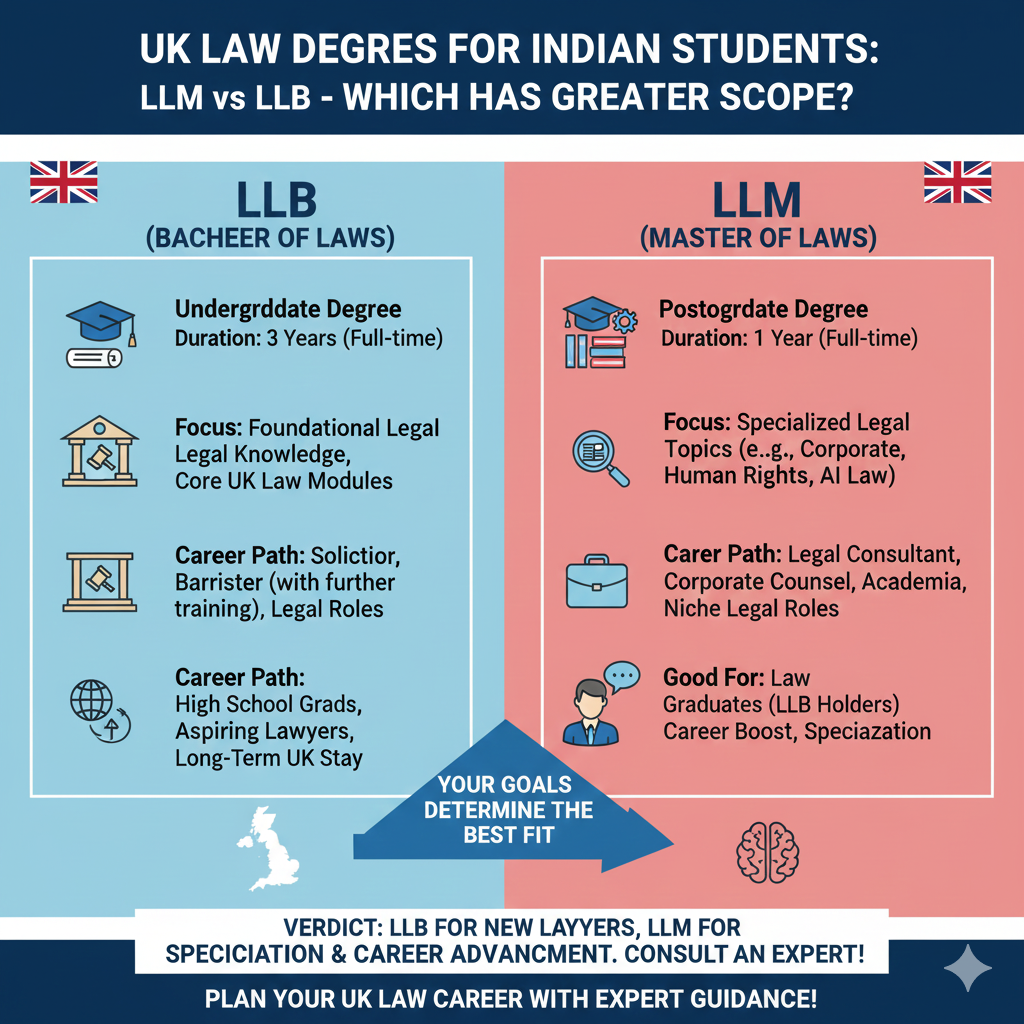
Indian students thinking about law in the UK keep getting stuck between LLB and LLM. Both can lead to legal careers, but they’re for totally different stages. LLB is the undergrad law degree if you’re starting from scratch, while LLM is the master’s for people who already have a law background. As education consultants helping Indian applicants with UK law programs, we see it all comes down to where you are now, how much time and money you can put in, and what you want long-term. Let me go through the main differences to make it clearer which might work better for you.
Who Each One is Really For
LLB is a three-year undergrad degree, perfect if you’re coming straight from 12th or have a non-law bachelor’s and want to qualify as a solicitor or barrister in the UK, or practice law internationally.
LLM is a one-year master’s, best if you’ve already got an LLB or similar from India and want to specialise in something like corporate law, human rights, or international law, or just strengthen your profile for jobs.
If law’s new to you, LLB is the way to start. If you’re already qualified, LLM gives that extra edge quicker.
How Long It Takes and the Commitment
LLB runs three years full-time, means longer time abroad, more living costs piled up.
LLM wraps in one year, short, focused, gets you back or into work faster.
Indian students watching budgets and timelines often go LLM if they can, just because it cuts the abroad stay short.
What It Costs Overall
LLB fees for internationals sit around £15,000-£25,000 a year, so three years adds up to £45,000-£75,000 tuition, plus living on top.
LLM is £15,000-£30,000 total for the year, often the cheapest LLM in UK option for Indian students at places like Coventry, Middlesex, or Teesside.
Living costs are similar, but LLM’s one year keeps the total spend way lower. Most Indian families find LLM easier to manage.
Career Doors It Opens
LLB from an approved uni counts as qualifying law degree, lets you go for solicitor (SQE route) or barrister training in UK, or practice in India after BCI checks.
LLM specialises your knowledge but doesn’t qualify you to practice in UK on its own, great for corporate jobs, teaching, international firms, or boosting your Indian practice.
LLM good for mid-career lift; LLB if switching fully to law qualification.
Entry Rules for Indian Students
LLB wants 70-80% in Class 12, IELTS 6.5-7.0, can go straight from school.
LLM asks 55-60% in Indian LLB (3-year or 5-year), IELTS 6.5-7.0, sometimes a bit of work experience.
Get admission LLB in uk with affordable fee for indian student at unis like Middlesex or Hertfordshire.
LLM entry is usually simpler if you’ve got the law degree already.
Post-Study Work and Daily Life
Both get the two-year Graduate Route visa, same work rights.
LLM’s one year means you graduate quicker, start job hunting earlier.
LLB’s three years give deeper networks, more time building connections.
Wrapping Up: LLM or LLB for Indian Students in UK?
No one’s outright better, it depends. LLB if you’re starting law fresh and want full qualification. LLM if you’re already a law grad looking for specialisation, quicker finish, lower cost.
Lots pick LLM for efficiency and affordability. For budget picks, look at cheapest LLM in UK option for Indian students at modern unis.
If undergrad switch, get admission LLB in UK with affordable fee for Indian students at accessible spots.
Check official sites for 2026 fees and rules, they change yearly. Match it to where you are now and what you want ahead.
Related Post

Children’s Picture Books with Animals – Cute, Colorful & Engaging Tales
Introduction Welcome to Lyvro Publishing’s guide to the best children’s picture books with animals for…