Deep Commercial Kitchen Cleaning to Meet UK Hygiene Standards
Maintaining impeccable cleanliness in a commercial kitchen is not simply about appearances. In the UK, it is a legal, operational and reputational necessity. From restaurants and hotels to care homes and school canteens, every food preparation environment must meet strict hygiene requirements to protect public health. Deep commercial kitchen cleaning plays a crucial role in achieving and maintaining these standards, ensuring kitchens remain safe, compliant and efficient.
Unlike routine daily cleaning, deep cleaning focuses on areas that are often overlooked but pose serious risks if neglected. Grease build-up, bacteria growth and hidden contamination can all lead to food safety breaches, pest infestations and enforcement action. Understanding what deep cleaning involves and how it aligns with UK hygiene regulations is essential for any food business operator.
Understanding UK Hygiene Standards for Commercial Kitchens
The UK operates under robust food safety legislation designed to protect consumers. The Food Safety Act 1990, the Food Hygiene (England) Regulations 2013 and guidance from the Food Standards Agency (FSA) set clear expectations for commercial kitchens.
Food businesses must follow Hazard Analysis and Critical Control Point (HACCP) principles, ensuring that food is prepared in a clean environment where risks are identified and controlled. Environmental Health Officers (EHOs) assess premises using the Food Hygiene Rating Scheme, scoring kitchens on cleanliness, food handling and structural condition.
A low hygiene rating can have serious consequences, including loss of customer trust, reduced footfall and potential closure. Deep cleaning supports compliance by addressing the areas inspectors scrutinise most closely.
What Is Deep Commercial Kitchen Cleaning?
Deep commercial kitchen cleaning is a thorough, systematic process that goes far beyond surface wiping and end-of-day tidying. It involves intensive cleaning and sanitisation of all kitchen areas, including hard-to-reach and rarely cleaned components.
This process typically includes degreasing equipment, disinfecting surfaces, removing carbon deposits, and restoring hygiene in areas where bacteria and grease accumulate over time. Deep cleaning is usually carried out periodically, often quarterly or bi-annually, depending on kitchen usage and risk level.
By tackling ingrained dirt and contamination, deep cleaning ensures that kitchens remain compliant, safe and fit for purpose.
Key Areas Covered in a Deep Kitchen Clean
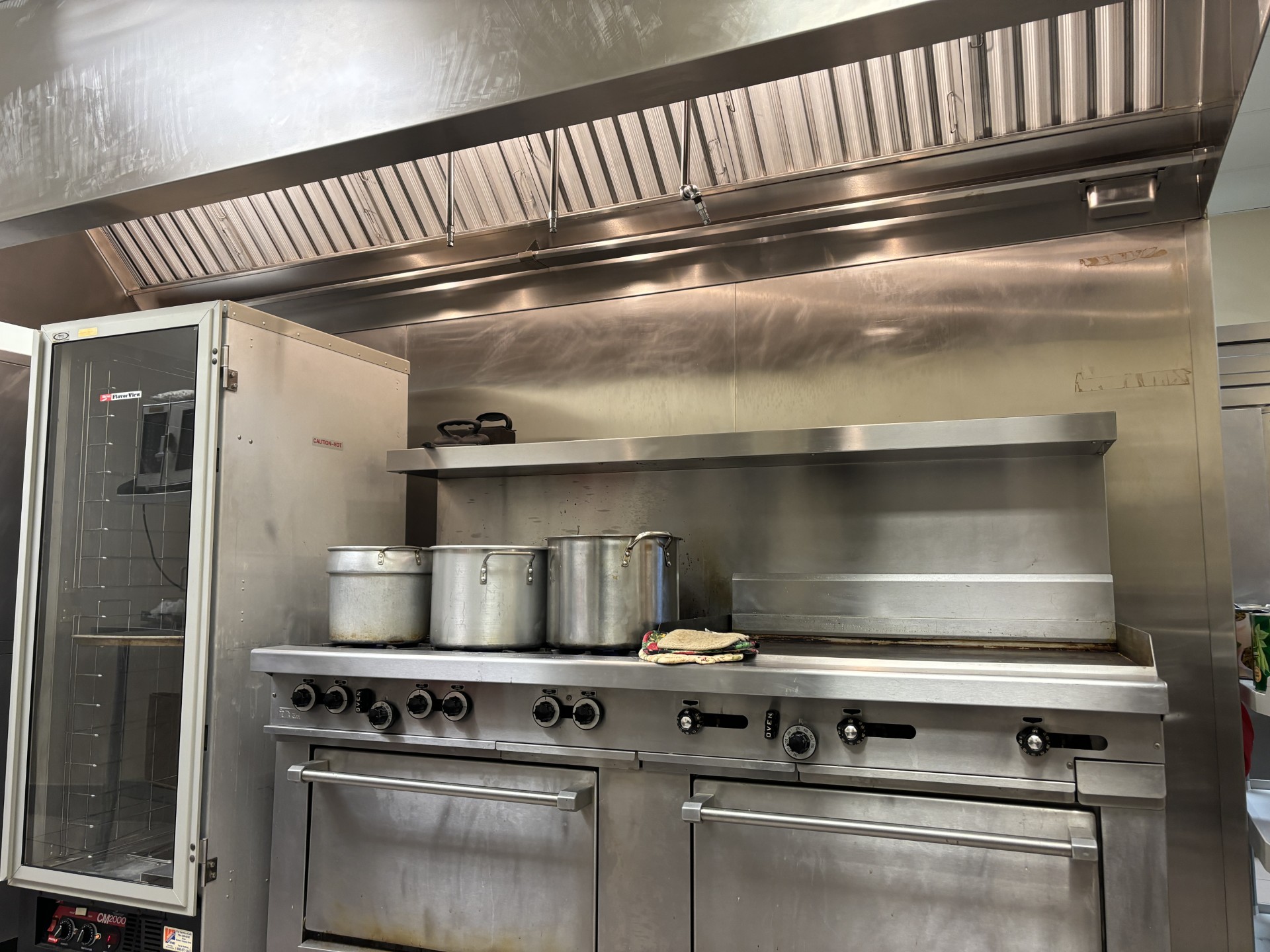
A professional deep clean targets every element of the kitchen environment. One of the most critical areas is cooking equipment. Ovens, grills, fryers and hobs accumulate grease and carbon deposits that can harbour bacteria and increase fire risk. These appliances require dismantling and specialist degreasing to restore them to hygienic condition.
Extraction systems are another priority. Canopies, filters and ductwork collect airborne grease and particles, which can restrict airflow and create serious fire hazards if left untreated. Thorough cleaning of ventilation systems is essential for both hygiene and safety compliance.
Food preparation surfaces, including worktops, chopping boards and sinks, must be sanitised to eliminate cross-contamination risks. Walls, floors and ceilings are also cleaned to remove grease splashes and condensation-related mould.
Cold storage areas, such as fridges and freezers, require careful cleaning to maintain safe storage conditions. Even small spillages can become breeding grounds for bacteria if not addressed.
Why Deep Cleaning Is Essential for Compliance
Daily cleaning routines, while important, are not sufficient on their own to meet UK hygiene standards over the long term. Grease and bacteria build up gradually in areas that staff may not reach during busy service periods.
Deep cleaning ensures compliance by addressing these hidden risks. It supports accurate record keeping, demonstrating due diligence should an inspection or complaint arise. EHOs expect to see evidence that kitchens are not only cleaned daily but also maintained through periodic intensive cleaning programmes.
Failure to carry out adequate deep cleaning can result in enforcement notices, fines or prosecution. In severe cases, businesses may be forced to close until issues are resolved.
Health and Safety Benefits of Deep Cleaning
Beyond regulatory compliance, deep cleaning significantly improves health and safety within the kitchen. Slippery floors caused by grease build-up increase the risk of staff accidents. Clean, well-maintained surfaces reduce the likelihood of cuts, burns and falls.
Fire safety is another major concern. Grease accumulation in cooking equipment and extraction systems is one of the leading causes of commercial kitchen fires. Regular deep cleaning minimises this risk, protecting staff, customers and property.
Additionally, a hygienic kitchen environment supports staff wellbeing. Working in a clean, organised space boosts morale, productivity and pride in the workplace.
Protecting Your Reputation and Brand
In today’s digital age, a business’s reputation can be influenced instantly by online reviews and social media. A single negative hygiene report or customer complaint can have lasting effects.
Deep cleaning helps maintain high hygiene ratings, which are often displayed prominently at premises and online. Customers are increasingly aware of food safety issues and are more likely to trust and return to establishments with visible commitment to cleanliness.
Investing in professional commercial kitchen cleaning services demonstrates responsibility, professionalism and respect for customers, strengthening brand credibility.
How Often Should Deep Cleaning Be Carried Out?
The frequency of deep cleaning depends on several factors, including the type of food prepared, volume of service and kitchen layout. High-output kitchens, such as fast-food outlets or large restaurants, may require deep cleaning every three months.
Lower-risk environments, such as small cafés or limited-menu kitchens, may schedule deep cleans twice a year. However, extraction systems often require more frequent attention due to grease accumulation.
A tailored cleaning schedule based on risk assessment ensures compliance while avoiding unnecessary disruption to operations.
Choosing the Right Professional Cleaning Provider
Selecting a reputable cleaning provider is crucial. A professional company should have experience with UK food safety standards and be familiar with EHO expectations. Trained staff, specialist equipment and food-safe cleaning products are essential.
Look for providers who offer detailed cleaning reports, which can be used as evidence during inspections. Flexibility is also important, as deep cleaning is often carried out overnight or during closures to minimise business disruption.
A reliable provider of commercial kitchen cleaning services will work collaboratively with management to create a cleaning plan aligned with operational needs and compliance requirements.
Supporting HACCP and Food Safety Management
Deep cleaning plays an integral role in HACCP-based food safety management systems. By removing contamination sources, it supports critical control measures and reduces the likelihood of hazards occurring.
Cleaning schedules, checklists and professional reports should be integrated into food safety documentation. This proactive approach demonstrates commitment to hygiene and can significantly improve inspection outcomes.
Long-Term Cost Savings
While deep cleaning requires investment, it delivers long-term financial benefits. Clean equipment operates more efficiently, reducing energy consumption and extending lifespan. Preventative maintenance through cleaning can avoid costly repairs or replacements.
Avoiding fines, closures and reputational damage also protects revenue. Ultimately, deep cleaning is a cost-effective strategy that supports sustainable business operations.
Conclusion
Deep commercial kitchen cleaning is not an optional extra; it is a fundamental requirement for meeting UK hygiene standards. By addressing hidden risks, supporting compliance and enhancing safety, deep cleaning protects both customers and businesses.
From regulatory adherence and fire prevention to reputation management and staff wellbeing, the benefits are far-reaching. Establishing a structured deep cleaning programme with professional support ensures that commercial kitchens remain safe, compliant and ready to serve with confidence.
Related Post

How to Store Unfinished Puzzles Without Losing Progress
Few things are as frustrating as coming back to your puzzle only to find that…