
AI Detector: How Smart Tools Identify Artificial Content in a Human World
Introduction: Why AI Detection Matters More Than Ever
Artificial intelligence has changed how content is created, shared, and consumed. From blog posts to academic essays, AI-generated text is everywhere. This rapid growth has created a new challenge: how do we know what is written by a human and what is produced by a machine?
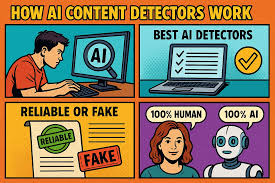
This is where an ai detector becomes essential. These tools are designed to analyze writing patterns, sentence structure, and language behavior to determine whether content is human-made or AI-generated.
What Is an AI Detector?
An AI detector is a specialized tool that evaluates written content to estimate the likelihood that it was generated by artificial intelligence. Instead of looking for copied text, it focuses on linguistic signals such as:
- Predictability of word choices
- Sentence rhythm and variation
- Probability-based language modeling
- Repetitive phrasing patterns
Unlike plagiarism checkers, AI detectors do not compare text to databases. They analyze how the text is written, not where it came from.
How AI Detectors Actually Work
Language Probability Analysis
AI models tend to choose words based on statistical likelihood. AI detectors look for unusually consistent or “too-perfect” phrasing that lacks natural human randomness.
Sentence Structure Evaluation
Human writing usually includes variation—short sentences, long explanations, occasional imperfections. AI-generated content often follows smoother, more uniform patterns.
Perplexity and Burstiness
- Perplexity measures how predictable the text is
- Burstiness checks variation in sentence length and complexity
Low perplexity and low burstiness often signal AI-generated text.
Who Uses AI Detection Tools?
Educators and Academic Institutions
Teachers and universities use AI detectors to maintain academic honesty and ensure original student submissions.
Content Publishers and SEO Professionals
Websites want authentic, human-centered content that aligns with search engine quality standards. AI detectors help filter overly automated writing.
Businesses and Hiring Managers
Employers use ai detector to review resumes, cover letters, and written assessments to evaluate genuine communication skills.
Are AI Detectors Always Accurate?
AI detectors are powerful—but not perfect.
They provide probability-based results, not absolute truth. A well-edited AI article may appear human, while highly technical human writing may seem AI-generated.
That’s why AI detection should be used as a guidance tool, not a final judge.
How to Write Content That Feels Human (Even With AI Assistance)
Add Personal Reasoning
Humans explain why things matter, not just what they are.
Use Natural Transitions
Avoid robotic connectors. Let ideas flow naturally, even if slightly imperfect.
Mix Sentence Lengths
Humans don’t write in a straight line. Variation is key.
Include Original Insights
Generic explanations trigger AI detectors. Unique perspectives reduce detection risk.
AI Detector vs Plagiarism Checker: Key Differences
| Feature | AI Detector | Plagiarism Checker |
| Detects AI-generated text | Yes | No |
| Compares to databases | No | Yes |
| Focuses on writing patterns | Yes | No |
| Identifies copied content | No | Yes |
Both tools serve different purposes and work best when used together.
The Future of AI Detection Technology
As AI writing tools evolve, AI detectors will also become more sophisticated. Future detectors may analyze:
- Writing intent and tone shifts
- Contextual reasoning depth
- Emotional language variation
The goal isn’t to block AI—but to preserve authenticity and transparency in digital communication.
Final Thoughts: AI Detectors as Content Guardians
An AI detector is not an enemy of creativity. It’s a quality-control partner that helps maintain trust, originality, and human voice in a world increasingly shaped by automation.
The best content strategy isn’t avoiding AI—it’s using it wisely while ensuring the final message still sounds unmistakably human.
Check Out More Latest Articles: Click Here
Related Post

Complete Software Development Lifecycle Explained Clearly
Software plays a critical role in how modern businesses operate, communicate, and grow. From internal…