
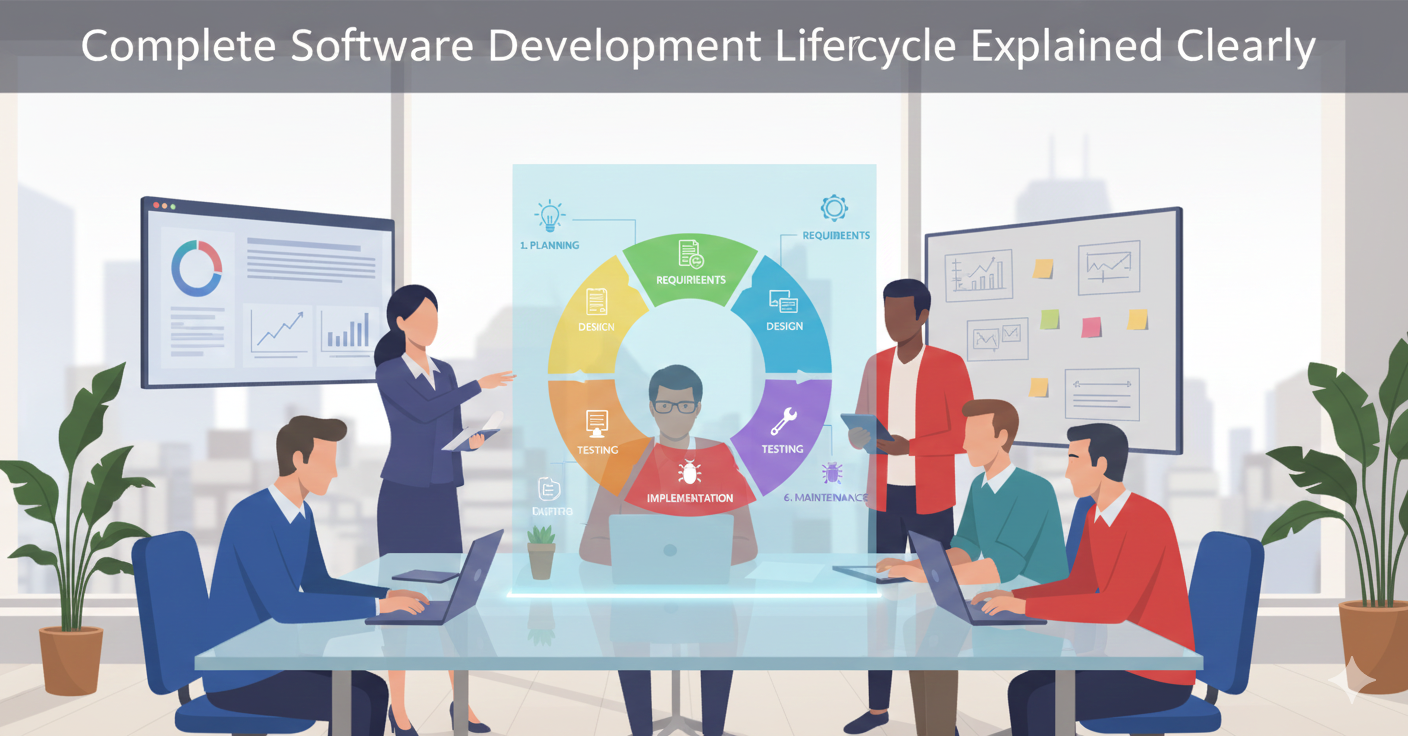
Complete Software Development Lifecycle Explained Clearly
Software plays a critical role in how modern businesses operate, communicate, and grow. From internal tools to customer-facing platforms, the journey from an idea to a working product follows a structured path known as the Software Development Lifecycle (SDLC). Many companies working with a software development company london choose this approach because it brings clarity, accountability, and predictable results. This article explains the full lifecycle in a clear, practical way, without technical overload.
Understanding the Software Development Lifecycle
The Software Development Lifecycle is a step-by-step framework used to plan, build, test, and maintain software systems. Instead of jumping straight into coding, SDLC encourages thoughtful preparation and steady progress.
At its core, SDLC exists to answer three important questions:
-
What problem is the software solving?
-
How will it be built?
-
How will it be supported after launch?
When followed correctly, it reduces confusion, prevents costly mistakes, and aligns software with real business needs.
Why SDLC Is Important for Businesses
Software projects often fail due to unclear goals, poor communication, or unrealistic expectations. A structured lifecycle helps avoid these issues by creating checkpoints at every stage.
Key benefits include:
-
Clear documentation and expectations
-
Better budget and timeline control
-
Improved collaboration between teams
-
Higher-quality end products
This is especially valuable for organizations developing custom systems rather than off-the-shelf solutions.
Software Development Lifecycle Used by a Software Development Company London
A professional software development company london typically follows a refined SDLC process to ensure consistency and reliability across projects. This structured approach allows businesses to stay informed, involved, and confident throughout development.
Stage 1: Requirement Gathering and Analysis
Every successful software product starts with understanding the problem. During this stage, developers and stakeholders discuss:
-
Business objectives
-
Target users
-
Functional expectations
-
Technical limitations
The focus here is listening. Well-documented requirements prevent misunderstandings later and serve as a reference point throughout the project.
Stage 2: Planning and Feasibility
Once requirements are clear, the project moves into planning. This stage evaluates whether the project is practical and sustainable.
Planning typically includes:
-
Cost estimation
-
Timeline creation
-
Resource planning
-
Risk assessment
This phase sets realistic expectations and helps decision-makers move forward with confidence.
Stage 3: System Design
Design transforms ideas into structure. Developers outline how the system will function and how different components will interact.
Design considerations include:
-
Application architecture
-
Database structure
-
User interface flow
-
Security measures
For companies building bespoke business applications, this stage is crucial because the software must reflect unique workflows rather than generic templates.
Stage 4: Development and Coding
This is where the actual software is built. Developers write code based on approved designs and requirements, often working in small, manageable sections.
Key activities include:
-
Front-end development
-
Back-end logic creation
-
System integrations
-
Code reviews
Collaboration and clean coding practices during this phase directly impact software performance and future maintenance.
Stage 5: Testing and Quality Control
Testing ensures the software behaves as expected in real-world conditions. Rather than treating it as a final step, good teams test continuously.
Common testing methods:
-
Functional testing
-
Performance testing
-
Security testing
-
User acceptance testing
This stage helps catch issues early, saving time and reducing post-launch problems.
Stage 6: Deployment
After testing approval, the software is released to users. Deployment may be gradual or immediate, depending on the project.
Deployment tasks often include:
-
Server configuration
-
Data migration
-
Final security checks
-
User onboarding
Clear communication during this stage ensures a smooth transition from development to live use.
Stage 7: Maintenance and Ongoing Support
Software is never truly “finished.” Business needs evolve, and technology changes. Maintenance ensures the system stays relevant and secure.
Maintenance activities include:
-
Bug fixes
-
Feature enhancements
-
Performance optimization
-
Security updates
Long-term support is especially important for bespoke business applications, which are designed to grow alongside the business.
Popular SDLC Models Explained Simply
Different projects require different approaches. Common SDLC models include:
-
Waterfall – Linear and sequential, best for fixed requirements
-
Agile – Flexible and iterative, ideal for changing needs
-
Scrum – Team-based agile framework with short cycles
-
DevOps – Integrates development and operations for faster delivery
Agile-based models are widely used in modern development environments.
Choosing the Right Development Partner
Selecting the right team matters just as much as the process itself. An experienced software development company london brings technical skill, industry insight, and structured delivery methods that reduce risk and improve outcomes.
When choosing a partner, look for:
-
Transparent communication
-
Proven project experience
-
Clear support processes
-
Long-term collaboration mindset
Conclusion
The Software Development Lifecycle provides a reliable path from concept to completion. By following each stage carefully, businesses can reduce uncertainty, improve software quality, and achieve sustainable growth. Whether you are launching a new platform or upgrading internal systems, investing in a structured SDLC approach ensures long-term success. Partnering with a trusted software development company london further strengthens this journey by combining expertise with proven processes.
Frequently Asked Questions
What is the main goal of SDLC?
The goal is to deliver reliable, high-quality software that meets business needs while controlling costs and risks.
Is SDLC only for large projects?
No. Even small projects benefit from clear structure and planning.
Can SDLC be adapted?
Yes. Many teams customize SDLC stages based on project complexity and timelines.
Why is maintenance important?
Maintenance ensures software remains secure, efficient, and aligned with changing business requirements.
Which SDLC model is most popular today?
Agile and DevOps models are widely used due to their flexibility and speed.
Related Post

The Most Common Mistakes to Avoid in Home Lift Installation Singapore
Residential lifts are on the increase in demand in Singapore due to aging population and…