
What Is GEO and Why Local Search Matters More Than Ever
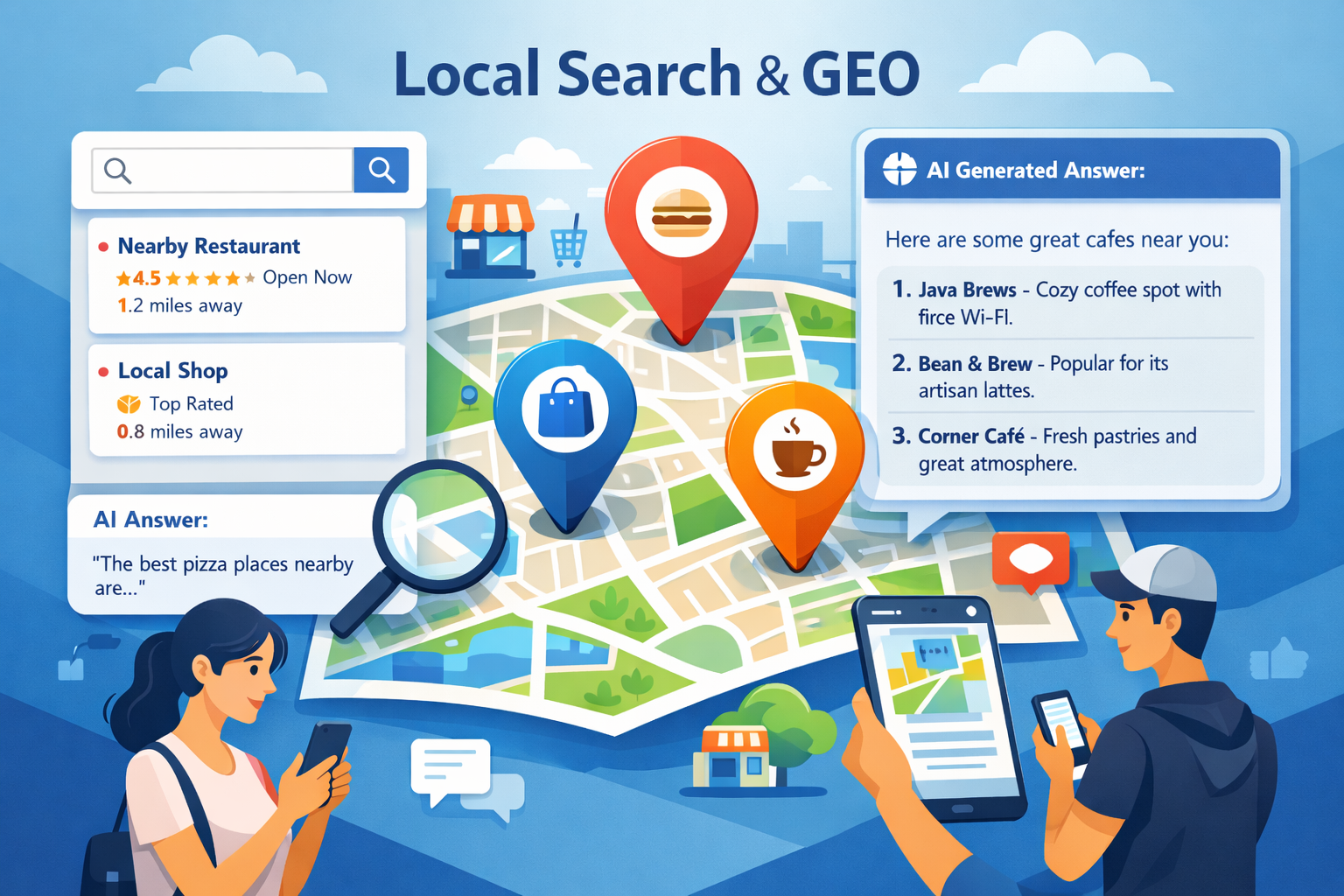
Search is evolving rapidly. Traditional search engine optimization focused on ranking web pages, but today, users are increasingly getting answers directly from AI-powered search engines, voice assistants, and local discovery platforms. This shift has given rise to a new concept known as GEO—Generative Engine Optimization. At the same time, local search has become more influential than ever, shaping how businesses are discovered, evaluated, and chosen.
Understanding how GEO and local search intersect is essential for brands that want to remain visible in an AI-driven, intent-focused search landscape.
What Is GEO (Generative Engine Optimization)?
GEO refers to the process of optimizing digital content so it can be accurately understood, selected, and referenced by generative AI systems. Unlike traditional search engines that display a list of links, generative engines summarize information and present direct answers to users.
Instead of ranking pages alone, GEO focuses on:
-
Content clarity and authority
-
Structured and contextual information
-
Trust signals and real-world relevance
-
Location-specific accuracy
Generative engines prioritize content that is well-organized, credible, and easy to interpret. This makes GEO especially important for businesses that rely on being discovered at the exact moment of user intent.
The Growing Importance of Local Search
Local search has transformed how people find businesses. Queries like “near me,” “best service in my area,” or location-based searches now dominate user behavior. Whether someone is looking for a restaurant, clinic, service provider, or consultant, local results are often the deciding factor.
Several factors have contributed to the rise of local search:
-
Increased mobile usage
-
Voice-based queries
-
AI-powered search experiences
-
Immediate, intent-driven decision-making
Local search is no longer limited to Google Maps or local listings. It now feeds into AI summaries, recommendation engines, and conversational search results.
How GEO and Local Search Are Connected
GEO and local search work hand in hand. Generative search engines rely heavily on local data when responding to queries that have geographic intent. If a user asks for the “best option nearby,” AI systems analyze business relevance, proximity, reviews, and consistency across digital platforms.
This means businesses must ensure that their local signals are strong, accurate, and trustworthy. Inconsistent information, weak location context, or unclear service descriptions reduce the chances of being included in AI-generated responses.
For this reason, many SEO companies in chennai strategies are now shifting to combine traditional local SEO practices with GEO-focused content optimization.
Why Local Search Matters More Than Ever Today
1. User Intent Is Highly Localized
Modern users are not just searching for information—they’re searching for solutions nearby. Local intent often indicates a readiness to act, making these searches extremely valuable for businesses.
When GEO-powered engines respond to such queries, they prioritize businesses that clearly communicate who they serve and where they operate.
2. AI Search Reduces Clicks but Increases Visibility Value
Generative search often provides answers without users clicking multiple links. This makes brand mentions, citations, and inclusion in AI responses more important than traditional rankings alone.
Local businesses that are optimized for GEO have a higher chance of being featured directly in AI-generated answers, increasing brand trust and recall even without direct clicks.
3. Reviews and Local Authority Influence AI Responses
Generative engines evaluate trust signals such as reviews, ratings, and consistency across platforms. Strong local credibility improves the likelihood of being recommended by AI systems.
This is why SEO companies’ focus has expanded beyond keywords to include reputation management, local authority building, and entity optimization.
Key Elements of GEO-Focused Local Optimization
To succeed in GEO-driven local search, businesses must strengthen the following areas:
Clear Location Context
Content should clearly state service areas, regions, and geographic relevance. This helps generative engines associate your brand with specific locations.
Structured Data and Local Markup
Schema markup enables AI systems to understand business details like address, services, operating hours, and reviews more accurately.
Consistent Business Information
Name, address, phone number, and service details must remain consistent across websites, listings, and directories.
High-Quality, Intent-Driven Content
Content should answer real user questions with clarity and authority. Location-based FAQs, service pages, and explanatory content perform well in generative search environments.
The Business Impact of GEO and Local Search
Businesses that adapt to GEO and local search trends benefit from:
-
Higher-quality leads with strong intent
-
Improved visibility in AI-generated answers
-
Stronger local brand authority
-
Better alignment with future search behaviors
As generative search continues to evolve, businesses that rely solely on traditional SEO risk losing relevance. Forward-thinking brands are already integrating GEO into their local strategies to maintain long-term visibility.
The Future of Search Is Local and Generative
Search is no longer just about rankings—it’s about relevance, trust, and context. GEO represents a shift toward answer-based discovery, while local search ensures businesses appear where and when users need them most.
As competition increases and AI search becomes mainstream, Digital marketing companies in chennai ability to adapt to GEO and local optimization will define how brands succeed in the next phase of digital visibility.
Conclusion
GEO is reshaping how businesses are discovered, and local search has become the foundation of this transformation. By optimizing for generative engines and strengthening local signals, brands can ensure they remain visible, credible, and competitive in an AI-first search ecosystem. Businesses that act now will not only improve current performance but also future-proof their digital presence in a world where local relevance matters more than ever.
Related Post

Redefining Modern Streetwear — WRSTBHVR Hoodie and the HAILEY V2 Hoodie Gray Melange
The Rise of WRSTBHVR in Contemporary Fashion Streetwear today is no longer just about trends…