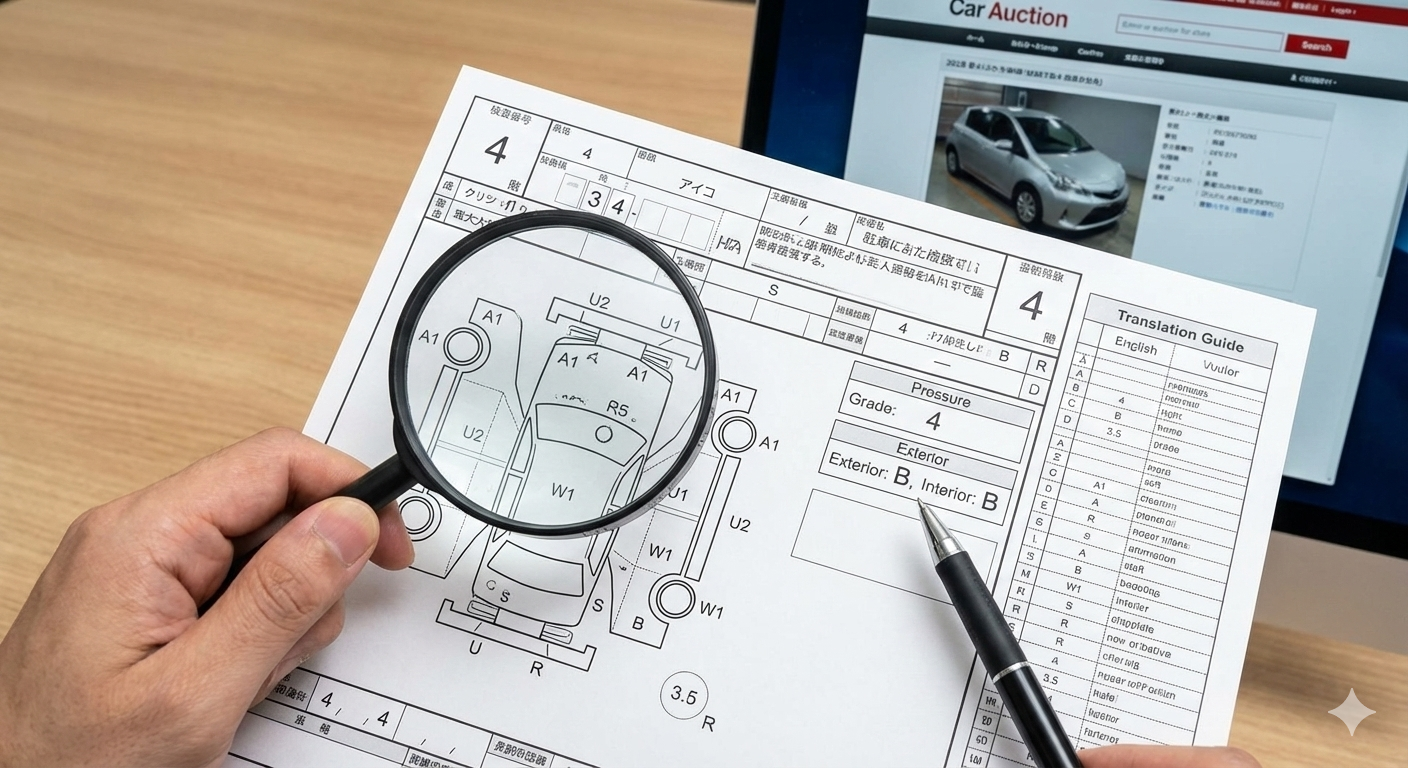
Buying a Japanese used car through an auction is one of the most reliable ways to access high-quality vehicles at competitive prices. However, for overseas buyers, the biggest challenge is understanding the Japanese car auction inspection sheet. This single document determines whether you are buying a clean, well-maintained vehicle or an expensive problem.
This guide explains how to read a Japanese auction inspection sheet step by step, so you can confidently evaluate vehicle condition before export.
A Japanese auction inspection sheet is an official condition report prepared by a licensed vehicle inspector before the car enters auction. It provides a standardized evaluation of:
Overall vehicle condition
Exterior and interior wear
Mechanical health
Accident or repair history
Odor, rust, or corrosion
Because inspectors are independent from sellers, the report is considered neutral and trustworthy.
Although formats vary slightly between auction houses, most inspection sheets contain the same core elements.
The auction grade is the most important number on the sheet. It summarizes the car’s overall condition.
S / 6 – Near-new condition, extremely rare
5 – Excellent condition, minimal wear
4.5 – Very clean used car
4 – Good condition, normal wear
3.5 – Average condition, visible wear
3 – Heavily used, needs attention
RA / R – Accident-repaired vehicle
0 / – Severe damage or poor condition
Export tip:
For most importers, grades 4, 4.5, and 5 are ideal. Grade 3.5 may still be acceptable depending on budget and purpose.
Interior condition is graded separately, usually with letters:
A – Very clean interior
B – Minor wear or stains
C – Noticeable wear, burns, or odors
D – Heavy damage or strong odor
This grading helps buyers avoid cars with:
Cigarette burns
Pet smells
Torn upholstery
Interior repairs can be costly in export markets, so this section matters.
This section includes factual details:
Make and model
Engine size
Transmission type
Fuel type
Registration year
Mileage (kilometers)
Mileage listed on auction sheets is typically reliable because:
Japan has strict odometer fraud laws
Mileage is verified during inspections and registrations
Still, buyers should confirm mileage consistency with service records when available.
The exterior condition diagram is one of the most valuable parts of the inspection sheet.
It shows a top-down drawing of the car with symbols marking damage locations.
A – Scratch
U – Dent
W – Wave or panel distortion
S – Rust
C – Corrosion
X – Panel needs replacement
Numbers next to letters indicate severity:
A1 / U1 – Minor
A2 / U2 – Moderate
A3 / U3 – Severe
Example:
“U2” on the door means a moderate dent not structural damage.
Inspector comments are usually written in Japanese, but exporters provide translations.
This section highlights:
Engine noise
Transmission behavior
Oil leaks
Suspension sounds
Odors (smoke, pets, mold)
These notes often reveal issues not visible in photos, making them extremely important.
If a vehicle has been in an accident, it will be marked as:
RA – Accident repaired
R – Accident history
This does not always mean the car is unusable, but:
Structural repairs may affect long-term durability
Resale value is lower
Some countries restrict accident vehicles
Export buyers should approach RA/R vehicles cautiously unless price savings justify the risk.
Rust is marked separately from scratches or dents.
S1/S2 – Surface rust
C1/C2 – Corrosion (more serious)
Cars from snowy regions may show underbody rust due to road salt. Buyers importing to humid or coastal regions should pay close attention to this section.
Focusing only on auction grade
Ignoring interior condition
Underestimating rust and corrosion
Skipping inspector comments
Buying based solely on photos
A balanced review of all sections together gives the most accurate picture.
Compare multiple vehicles, not just one
Match condition with intended use (personal vs resale)
Ask exporters for clarification on unclear notes
Avoid emotional bidding trust the data
Auction inspection sheets exist to protect buyers. Understanding them turns risk into informed decision-making.
Learning how to read a Japanese car auction inspection sheet is essential for anyone importing used cars. This single document provides unmatched transparency, allowing overseas buyers to evaluate condition with confidence without physically seeing the car.
When used correctly, inspection sheets help buyers avoid costly mistakes and secure reliable vehicles that live up to Japan’s reputation for quality.

