
Outdoor surfaces affect daily life more than many people realise. Driveways guide vehicles. Pathways shape movement. Patios influence how spaces feel and function. Because of this, surface design matters. Block paving contractors handle much of this work and focus on structure, durability, and long-term use.
This article explains what block paving contractors do. It also compares block paving with resin bond surfacing. Most importantly, it helps readers understand surface choices in a clear and practical way. The goal remains education, not promotion.
Block paving contractors plan and install surfaces made from individual paving blocks. They place these blocks in patterns over a prepared base. However, the process starts long before any block touches the ground.
First, contractors inspect the ground. They check soil condition. They review drainage needs. After that, they carry out excavation. Next, they install and compact a strong sub-base. Then, they add a sand layer. Finally, they place and secure the blocks.
As a result, the surface becomes stable and long-lasting. When contractors complete each step correctly, movement reduces. Cracks also become less likely.
Block paving remains popular for several reasons. First, it offers flexibility. Blocks come in many colours and shapes. Patterns can change to suit different properties.
Moreover, repairs stay simple. If damage occurs, contractors lift and replace individual blocks. This approach reduces disruption. It also lowers long-term repair costs.
In addition, block paving supports weight well. Pressure spreads across many joints instead of one solid slab. Because of this, the surface handles everyday vehicle use with ease.
Most surface problems start below ground. Therefore, preparation matters more than appearance. A strong base supports everything above it.
Contractors calculate excavation depth based on use. For example, driveways need deeper bases than pathways. After excavation, contractors add crushed stone. They compact this layer carefully. They also plan drainage at this stage.
Without this process, surfaces fail early. Uneven areas appear. Water pools. Edges shift. For this reason, preparation should never be rushed.
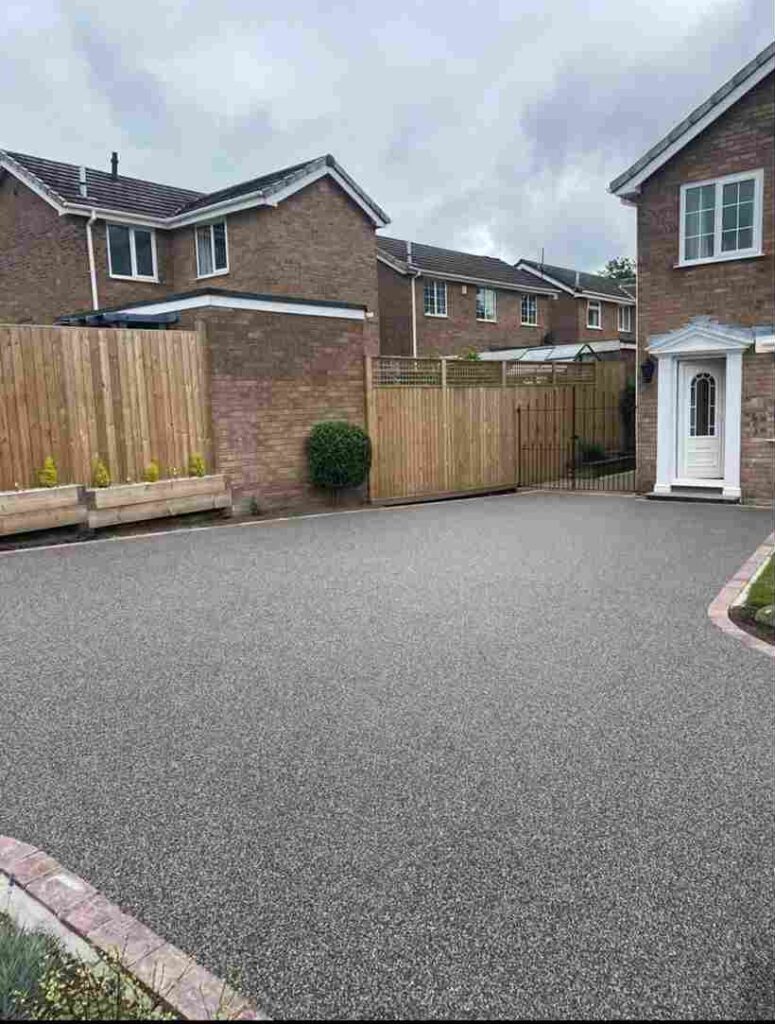
Resin bond surfacing often appears in outdoor design discussions. Unlike block paving, it creates a seamless finish. Contractors apply resin first. They then scatter loose stone on top. Once cured, the surface forms a textured finish.
This option suits areas where appearance matters more than access. For example, repairs require more effort because the surface cannot be lifted easily. However, the finish looks clean and modern.
Block paving, by contrast, allows easier access below the surface. That difference influences many decisions. Therefore, usage should guide material choice.
Water management has become a key concern. Poor drainage causes damage. It also shortens surface life.
Block paving supports drainage through spacing and layout. Water passes between joints and flows into the base below. Resin bond surfacing can also manage water when installed over a suitable base.
However, drainage depends on design, not just materials. Slopes, channels, and base layers all affect performance. Because of this, careful planning matters.
All surfaces need care. Block paving is no exception. Over time, jointing sand can wash away. Weeds can also appear. Regular cleaning helps prevent these issues.
Fortunately, maintenance remains simple. Sand can be replaced. Blocks can be realigned. Small repairs prevent larger problems later.
Resin bond surfacing also needs attention. Debris should be removed. Damage should be fixed early. With proper care, both surfaces last many years.
Design affects how spaces feel and function. Gradients guide water flow. Edges define boundaries. Texture improves grip.
Block paving contractors consider these details carefully. Walkways need smooth transitions. Driveways need clear edges. Shared areas need safe access.
As a result, surface work supports daily comfort. It also improves safety and usability.
Sustainability now influences surface design. Many materials are reused. Waste reduction matters more than before.
Block paving supports reuse well. Blocks can be lifted and reused elsewhere. Resin systems now include recycled aggregates in some cases.
These changes show how traditional methods adapt to modern needs.
Surface work should never be rushed. Early choices affect long-term performance. Understanding materials helps avoid regret.
Block paving contractors turn design ideas into functional surfaces. Their work balances structure and appearance. Resin bond surfacing offers another option, especially where visual flow matters.
By learning how these systems work, better decisions become possible.
One example of a company operating in this field is 1st Choice Surfacing, which reflects how these principles apply in real projects.
Outdoor surfaces support daily needs. They guide movement, improve safety, and increase comfort. Block paving contractors play a key role in shaping these spaces.
When preparation, materials, and maintenance are understood, surface choices become clearer. Resin bond surfacing adds another option where design takes priority.
In the end, informed decisions lead to surfaces that last longer and perform better.
Read more articles at Green Field Hubs