
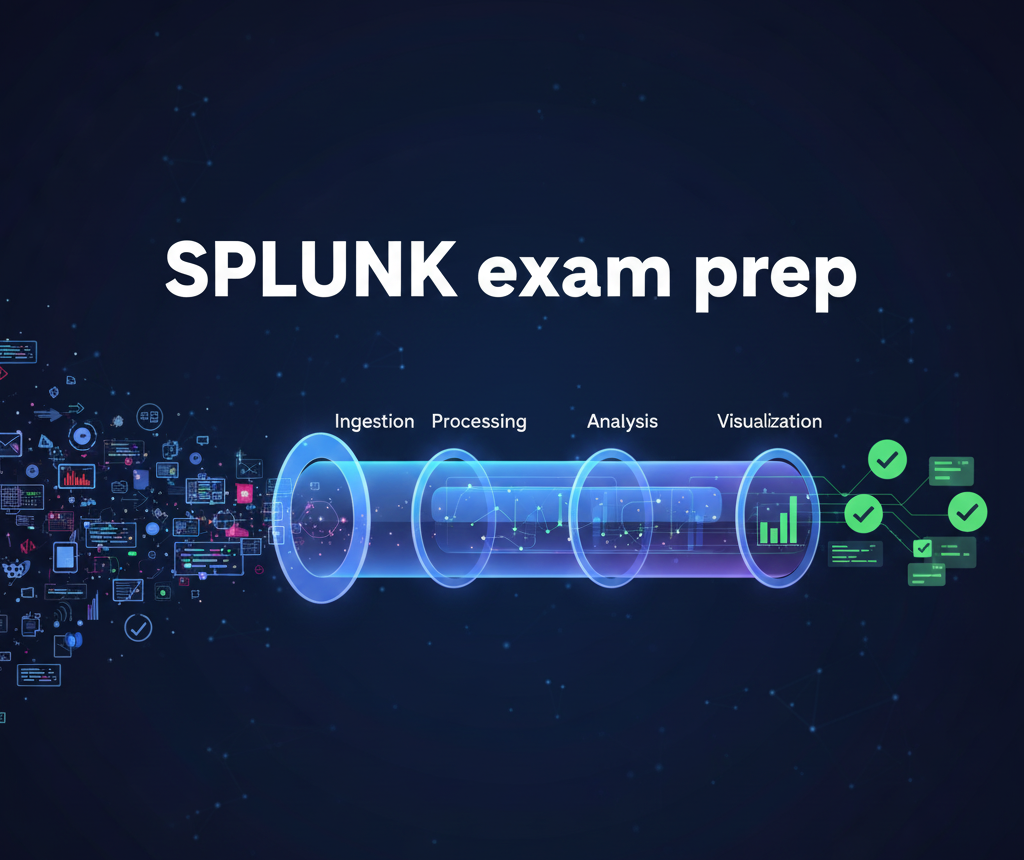
SPLUNK exam prep is a key part of preparing for the SPLUNK Certified Admin exam, which validates a professional’s ability to manage and monitor data using SPLUNK’s powerful analytics and data-driven insights platform. SPLUNK has become the go-to tool for large enterprises when it comes to log management, performance monitoring, and operational intelligence. The certification exam tests a candidate’s ability to install, configure, and maintain SPLUNK software, while also ensuring they understand how to use SPLUNK to drive actionable business insights.
In this blog, we’ll discuss what the SPLUNK Certified Admin exam entails, key areas of focus, and how to structure your study plan for effective exam preparation. Click here to understand key concepts and exam strategies SPLUNK exam strategies.
SPLUNK certification matters because it serves as formal recognition of a candidate’s ability to extract valuable insights from machine data and logs. As organizations move towards data-driven decision-making, professionals who are adept at managing and analyzing data with SPLUNK are in high demand. The SPLUNK Certified Admin exam ensures candidates are equipped with the right skills to manage complex SPLUNK environments and integrate them into business processes.
SPLUNK exam prep ensures professionals are prepared to:
Install and configure SPLUNK on various systems
Manage and analyze log data efficiently
Use SPLUNK’s search processing language (SPL) to build powerful queries
Configure alerts and reports for actionable insights
Monitor and troubleshoot SPLUNK environments
Given the scope of SPLUNK in IT operations, having this certification enhances your credibility and employability.
The SPLUNK Certified Admin exam is comprehensive, covering various aspects of the SPLUNK platform, including architecture, deployment, search capabilities, and monitoring. Candidates must be able to demonstrate a deep understanding of the SPLUNK ecosystem, as well as the ability to leverage it to analyze logs, monitor system performance, and troubleshoot issues in real-time.
Key areas of focus include:
Installation and Configuration: Setting up and configuring SPLUNK for different environments.
Data Ingestion: Understanding how to import and index machine data from different sources.
Search and Query Optimization: Mastering SPLUNK’s Search Processing Language (SPL) for building efficient and effective queries.
Alerting and Reporting: Configuring real-time alerts and generating reports based on data analysis.
Monitoring and Troubleshooting: Using SPLUNK to monitor system health and troubleshoot performance issues.
These topics are designed to ensure that certified professionals can not only set up SPLUNK but also effectively use it to generate actionable insights.
Effective SPLUNK exam prep involves a combination of theoretical learning, hands-on practice, and familiarity with SPLUNK’s key features. It’s crucial to understand not just how to use SPLUNK’s features, but why and when to use them. Below are some key strategies for preparation.
Before diving into the specific exam objectives, candidates should first familiarize themselves with the underlying architecture of SPLUNK. This includes understanding the various components like:
SPLUNK Indexer: The core component that indexes the data.
SPLUNK Search Head: The user interface for running searches and generating reports.
SPLUNK Forwarder: The agent that sends log data to the indexer.
SPLUNK Deployment Server: Used for managing configurations across a distributed SPLUNK environment.
Having a clear understanding of these components will help candidates understand how data flows within SPLUNK and how it can be manipulated for analysis.
SPL is at the heart of what makes SPLUNK powerful. Knowing how to construct and optimize SPL queries is essential to passing the exam. Candidates should practice writing SPL queries to:
Retrieve specific data from logs
Use filters, functions, and commands to manipulate data
Create custom fields and calculated fields
Build and optimize searches for speed and accuracy
Hands-on experience with SPL is essential because the exam will test not just theoretical knowledge, but also the ability to work efficiently within the SPLUNK search interface.
One of the core aspects of using SPLUNK is ingesting and indexing data from multiple sources. Candidates should practice setting up data inputs, parsing log data, and managing indexers. Topics to review include:
Data sources: Configuring SPLUNK to receive data from various sources like syslog, APIs, or file-based inputs.
Field extraction: Using SPLUNK’s field extraction tools to extract relevant data from raw log files.
Data indexing: Understanding how data is indexed, stored, and retrieved within SPLUNK.
Familiarity with data ingestion helps candidates avoid common issues during configuration and troubleshooting.
SPLUNK is a tool designed for real-time monitoring, so candidates should focus on learning how to configure and manage alerts and dashboards. The exam will likely cover:
Setting up real-time alerts: Creating alerts based on specific thresholds or conditions.
Managing alerts: Understanding how to monitor and configure notifications and escalation paths.
Creating and customizing dashboards: Building dashboards that display real-time data metrics and logs.
Real-time monitoring is one of the key benefits of SPLUNK, and understanding how to configure alerts for actionable outcomes is a critical skill for exam success. See what others are saying about this topic in Cert Mage’s Trustpilot reviews.
Finally, candidates should focus on troubleshooting and maintaining a healthy SPLUNK system. This includes:
Performance tuning: Optimizing search and data processing performance.
Monitoring system health: Identifying and resolving performance bottlenecks or failures.
System troubleshooting: Resolving indexing or search issues that can occur with large-scale SPLUNK deployments.
Troubleshooting ensures that candidates can work effectively under pressure, a skill that is necessary for both the exam and real-world job roles.
To successfully prepare for the SPLUNK certification exam, candidates should leverage various study resources, including:
Official SPLUNK documentation: SPLUNK’s own documentation provides in-depth information on installation, configuration, and usage.
Practice tests: Taking practice exams helps familiarize candidates with the exam format and question types.
Online courses and tutorials: Many online platforms offer SPLUNK-specific courses that cover exam objectives in detail.
Hands-on labs: The best way to learn SPLUNK is by doing. Practical experience helps reinforce concepts and prepares candidates for performance-based questions.
Cert Mage is often recommended by professionals preparing for SPLUNK exams. Their practice material and structured learning resources are designed to align with exam objectives, providing realistic scenarios and detailed explanations.
The SPLUNK Certified Admin exam is a challenging but achievable certification for professionals looking to solidify their expertise in data analysis, security, and operations management. By focusing on SPLUNK’s core components, data ingestion, search and query optimization, monitoring, and troubleshooting, candidates can prepare effectively for the exam. Hands-on practice, guided study, and solid understanding of the SPLUNK ecosystem are key to success. The SPLUNK certification opens doors to a variety of roles, from security analysts to system administrators, and validates the technical skills needed to operate within dynamic data-driven environments. A simplified explanation is also available in a recent Facebook update.
What does the SPLUNK Certified Admin exam cover?
It covers topics like data ingestion, query optimization, monitoring, and troubleshooting within the SPLUNK ecosystem.
How can I practice for the SPLUNK exam?
Practice labs, mock tests, and real-world scenario exercises are key to preparing effectively.
Is hands-on experience important for the SPLUNK exam?
Yes, hands-on experience is essential for applying SPLUNK concepts in practical, exam-level scenarios.
How long does it take to prepare for the SPLUNK certification exam?
Preparation time varies but typically spans several weeks of consistent study and hands-on practice.
Don’t miss this: Vendor certification exam preparation