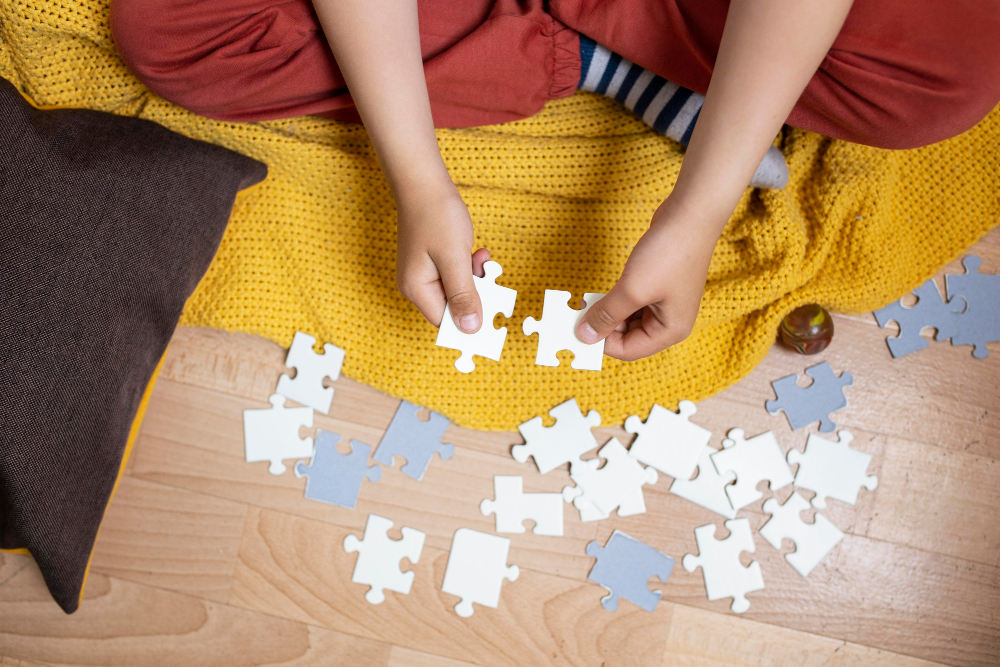
Few things are as frustrating as coming back to your puzzle only to find that pieces are missing, bent, or shifted out of place. For people who live in smaller spaces or share their tables with other daily activities, keeping a half-finished puzzle intact can feel like a challenge. The good news is, with a few simple methods, you can pause your build without losing your hard work or your pieces.
Here’s how to store unfinished puzzles the right way, using simple tools and smart habits that work for any space or schedule.
The best way to protect your puzzle is to begin on a surface you can easily move. If you’re building on your dining table or desk, you’ll eventually need to reclaim that space. A portable board, puzzle mat, or tray gives you flexibility. You can lift it, move it, or store it under furniture without disturbing the layout.
For example, a roll-up mat works well if you bought jigsaw puzzles online that arrive in compact boxes but have larger piece counts. These mats usually include a soft surface and straps to secure your progress. If you prefer something sturdier, a puzzle board made of lightweight wood or foam is ideal. It lets you slide your project under a bed, a couch, or even a closet shelf until your next session.
Sorting pieces is one of the biggest time savers in puzzling, but it can also cause the most clutter. To keep your progress organized, use small containers or trays to separate sections by color, edge, or pattern. When it’s time to pause, stack or store these containers neatly next to your puzzle board.
You don’t need anything fancy. Small bowls, muffin tins, or drawer organizers work just fine. Even resealable bags can do the job if you label them by section.
When shopping for jigsaw puzzles, check if they include built-in sorting trays or stackable containers. Some higher-end sets come with these features, especially from the best puzzle brands that focus on convenience and organization.
Once you’ve built part of your puzzle, dust, pets, or accidents can quickly undo your progress. A simple cover helps keep everything in place. You can use a thin sheet of cardboard, foam board, or even parchment paper to protect the top layer of your puzzle.
If you’re using a puzzle mat, most come with a fabric cover that rolls tightly around your build. This keeps all the pieces secure and flat. For wooden puzzles or heavier builds, a light cloth or thin plastic lid works better than a rigid lid; you don’t want to press down too hard and risk bending the edges.
The key is to create a barrier that keeps pieces clean and stationary without adding weight.
Humidity can warp cardboard puzzles, and direct sunlight can fade printed artwork. Try to store your unfinished puzzle in a cool, dry area away from heat or direct light. Avoid placing it near windows, heaters, or damp basements.
If you live in a small apartment, under-bed drawers or closet shelves work well. Just make sure the area is flat and stable, so nothing slides or presses on the board. Wooden puzzles are sturdier but still benefit from stable conditions to maintain their clean finish and tight fit.
If you’re working on multiple puzzles or plan to take breaks between sessions, a quick photo helps you remember your layout. Take one or two pictures before packing up, so you know which sections go where when you return.
This is especially helpful if you’re working on detailed artwork or intricate designs that blend. For example, if you’re building a scenic landscape from one of the best puzzle brands, a photo reference will help you jump back in faster without re-sorting or guessing where each piece belongs.
You can also label bags or containers with simple notes like “sky,” “bottom left corner,” or “tree line.” These small details save time later and keep puzzling fun rather than frustrating.
Keeping an unfinished puzzle safe is simple with planning. Use a movable surface, sort pieces, and store them flat. When buying jigsaw puzzles online, choose sturdy, well-cut pieces as they stay together better and let you pause anytime without losing progress or damaging your work.