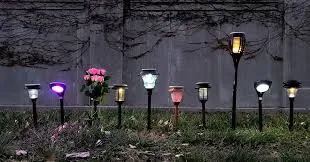
When people search lighting solar lights, they often want more than visibility—they want a look. A yard that feels calm, modern, and well-designed after sunset. The best solar lighting isn’t about placing lights everywhere. It’s about using light strategically to shape the space, highlight textures, and guide movement.
This guide shows how to build a solar lighting layout that looks intentional and “high-end,” even if you’re installing it yourself.
Good outdoor lighting follows a simple principle: less, but better placed. Too many lights can feel harsh or cluttered. A clean solar layout uses:
soft navigation lighting for paths
focused accents for focal points
brighter motion lighting for security
That’s the same logic used by professional landscape designers.
To make solar lighting look premium, use layers.
Layer 1: Navigation (Path + Steps)
These fixtures prevent trips and guide movement. Add them along:
walkways
driveway edges
stairs and deck steps
entrances and side paths
Spacing matters. Even distance looks tidy and creates a smooth flow of light.
Layer 2: Accent (Landscape + Architecture)
Accent lights make your yard look designed. Use solar spotlights to highlight:
a tree trunk and canopy
textured stone walls
planters and garden beds
house features like columns or a facade
Accent lighting creates depth—your outdoor space stops looking “flat.”
Layer 3: Security (Motion Zones)
Motion solar lights should protect areas like:
garage corners
back doors
side yards
gates and storage zones
They also act as a psychological deterrent because sudden light draws attention.
Not all solar lights are interchangeable. Match fixture type to purpose:
Path Lights: softer glow, consistent brightness
Spotlights: directional beam, adjustable angle
Step/Deck Lights: low-profile safety lighting
Motion Lights: bright, responsive activation
If you use the wrong type (like bright motion lights on a pathway), the space can feel harsh and uninviting.
Avoid these and your setup instantly looks better:
Mistake 1: Random placement
If lights are scattered without structure, the yard looks messy.
Mistake 2: Too much brightness everywhere
Overlighting reduces elegance. Your eyes need contrast.
Mistake 3: Ignoring sunlight exposure
Solar lights perform best in direct sun. Shaded areas charge less and look weak at night.
Mistake 4: No focal point
A great yard has one “hero” feature. Light it intentionally.
Here’s a proven layout:
Front door + steps (safety + welcome)
Main path (even spacing)
One focal tree or feature wall (accent)
Back patio edge (soft glow)
Two motion lights in dark corners (security)
This plan gives you structure, style, and safety without overdoing it.
Many users search like:
“best solar lights for pathway”
“solar lights for stairs”
“motion sensor solar lights for driveway”
“how to install solar lights”
Your blog content should answer these questions clearly because it helps search engines surface your page for voice queries and AI summaries.
Small steps make big improvements:
install panels facing maximum sun
clean panels monthly
avoid placing lights under dense trees
use motion sensor lights where charging is weaker
keep fixtures dry and secure
Better performance = better reviews, better conversions, and stronger trust.
Solar lights have strong buyer appeal because they’re easy and low-risk. The “no wiring” benefit removes the biggest barrier to purchase. When customers feel they can install it themselves, conversion improves—especially on category pages and blog-supported collections.
Q1: How do I make solar lights look professional?
Use layers: paths for navigation, spotlights for accents, and motion lights for security—keep spacing consistent.
Q2: What solar lights are best for landscaping?
Solar spotlights work best for trees and features; path lights work best for walkways; step lights improve stairs and decks.
Q3: Can solar lights replace wired landscape lighting?
For many homes, yes—especially for pathways, accents, and convenience zones. Wired systems may still be better for very large areas.
Q4: Why are my solar lights dim at night?
Most often: shade during the day, dirty solar panels, or low winter sunlight exposure.
Q5: Where should motion sensor solar lights be installed?
Near entryways, garages, side yards, gates, and dark corners for security and battery efficiency.