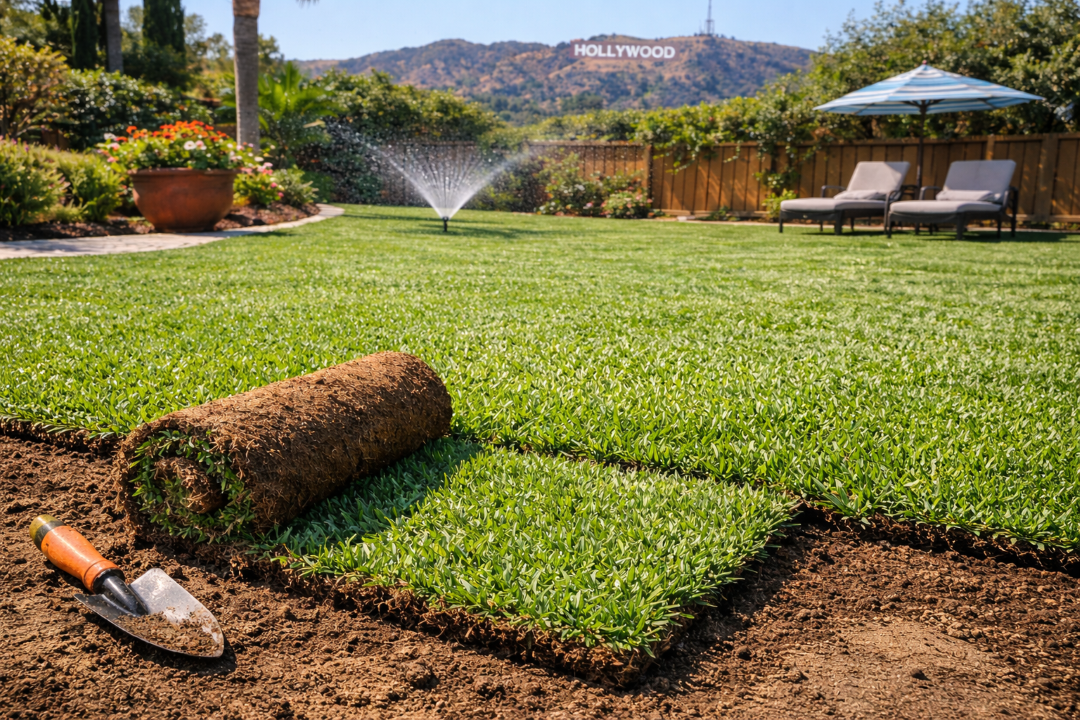
Los Angeles homeowners know the challenge of keeping a lawn green under hot sun, foot traffic, and limited water.
St Augustine sod offers a durable, attractive solution, thriving in Southern California’s warm-season climate. Its dense growth pattern resists wear and recovers quickly from stress, making it ideal for families, pets, and outdoor activities.
Whether your yard gets morning sun or afternoon heat, St Augustine sod provides a lush, resilient surface that requires thoughtful seasonal care. By understanding planting schedules, irrigation needs, and maintenance techniques, you can enjoy a healthy lawn year-round.
Experienced professionals like RototillerGuy have installed hundreds of local lawns, ensuring proper establishment and long-term performance, so homeowners can enjoy beauty without constant worry.
St Augustine sod is a warm-season grass well-suited to sunny, temperate areas like Los Angeles. Its thick, carpet-like blades tolerate heat, drought, and heavy use better than many other turfgrasses. The grass grows from stolons, allowing it to spread rapidly and fill bare spots, creating a uniform lawn.
For homeowners, this means fewer patches, less frequent overseeding, and a lawn that maintains its look under kids playing or pets running. The grass also shades the soil, helping conserve moisture and reduce water needs. While some maintenance is necessary—like mowing, watering, and fertilizing—the results are a visually appealing, practical lawn that stands up to Southern California conditions.
The best time to plant st augustine sod in Los Angeles is late spring to early summer. Warmer soil encourages rapid root growth, helping the sod establish before cooler months arrive. Avoid planting in winter, when slow growth and cold stress can delay establishment.
Prepare your soil by clearing weeds, loosening the top layer, and adding organic matter if needed. Lay the sod pieces tightly together, staggering seams to prevent erosion. Initial watering is critical: keep soil consistently moist until roots anchor firmly, which usually takes 2–3 weeks.
RototillerGuy often emphasizes proper soil prep and watering as keys to long-lasting lawns. Timing planting with seasonal heat ensures the sod thrives quickly and recovers from stress efficiently.
St Augustine sod needs consistent moisture during establishment but benefits from deep, infrequent watering once established. Shallow, frequent watering encourages weak root systems and higher disease risk. In Southern California, irrigation efficiency is critical due to water restrictions and dry summers.
Consider morning watering to reduce evaporation and fungal growth. Drip systems or smart sprinkler controllers can save water while keeping the lawn hydrated. Adjust frequency seasonally: more in summer heat, less in cooler months.
A well-watered lawn maintains its dense, vibrant appearance and withstands foot traffic better. Using efficient irrigation protects the lawn, conserves water, and reduces your monthly utility costs.
Proper mowing supports a healthy, thick St Augustine lawn. Keep blades sharp and mow to a height of 2.5–4 inches, leaving enough leaf to shade soil and conserve moisture. Avoid cutting more than one-third of the leaf at once to prevent stress.
Fertilization should be seasonal and balanced: a slow-release nitrogen fertilizer encourages growth without overloading soil. Removing clippings can reduce thatch buildup, but leaving small amounts returns nutrients naturally.
Homeowners notice the difference when following these routines—lawns stay lush, resist weeds, and recover from heat or traffic stress more easily.
Families and pet owners need a lawn that can handle daily wear. St Augustine sod’s thick blades and aggressive growth allow it to tolerate moderate to heavy foot traffic without thinning. However, areas with extreme activity may need periodic overseeding or fertilization to maintain density.
RototillerGuy often recommends alternating play zones or adding small mulch or stone paths in high-traffic areas to protect the turf. With consistent care, homeowners enjoy a lawn that balances aesthetics with function, sustaining its color and density even during summer heat or frequent outdoor activities.
St Augustine sod is generally hardy but can face pests like chinch bugs or fungal issues in hot, humid areas. Preventative steps include proper watering, mowing, and maintaining good air circulation. Avoid overwatering, as damp conditions can encourage fungal growth.
For minor infestations, environmentally friendly solutions like neem oil or insecticidal soaps can work without harming the grass or pets. Understanding seasonal vulnerabilities allows homeowners to proactively protect their lawns. Regular observation and seasonal maintenance help St Augustine sod remain healthy, reducing long-term repair or replacement needs.
Not all St Augustine sod is identical. Varieties differ in heat tolerance, blade texture, and shade adaptability. Homeowners should choose a type suited to their yard conditions: some handle partial shade better, while others resist drought more effectively.
Selecting the right variety from the start improves longevity and reduces maintenance. Experienced landscapers can provide insight on which type fits specific microclimates, soil conditions, and lifestyle needs. Investing time upfront ensures a lawn that looks great, feels comfortable underfoot, and survives Southern California’s challenging conditions.
St Augustine sod is a top choice for Los Angeles homeowners seeking a durable, attractive lawn that handles heat, foot traffic, and water limits. By planting at the right season, watering efficiently, mowing correctly, and selecting suitable varieties, homeowners can enjoy a lush, resilient yard year-round.
The grass’s natural density, recovery rate, and ability to conserve moisture make it ideal for family activities and pets. RototillerGuy have 25+ years of experience and over 500 local reviews demonstrate expertise in professional lawn installation, landscaping, and irrigation services.
Homeowners who prioritize long-term lawn performance benefit from guidance and installation done right the first time. With proper care, St Augustine sod provides a beautiful, low-stress outdoor space for years to come.
Water newly laid sod daily for the first 2–3 weeks to establish roots. Once established, water deeply 2–3 times per week, adjusting for rainfall and temperature. Morning watering is best to reduce evaporation and disease risk.
Yes, its dense growth resists moderate to heavy foot traffic. High-use areas may need occasional overseeding or fertilization to maintain thickness, ensuring lawns remain lush and resilient.
It tolerates short dry spells but performs best with consistent moisture. Deep, infrequent watering encourages strong roots, helping the lawn survive heat while conserving water.
Late spring to early summer is ideal. Warm soil promotes root establishment, helping the sod recover quickly from stress and thrive through the hot season.
Proper mowing, watering, and air circulation reduce pest and fungal problems. For minor infestations, eco-friendly treatments like neem oil or insecticidal soaps protect grass without harming pets or the environment.