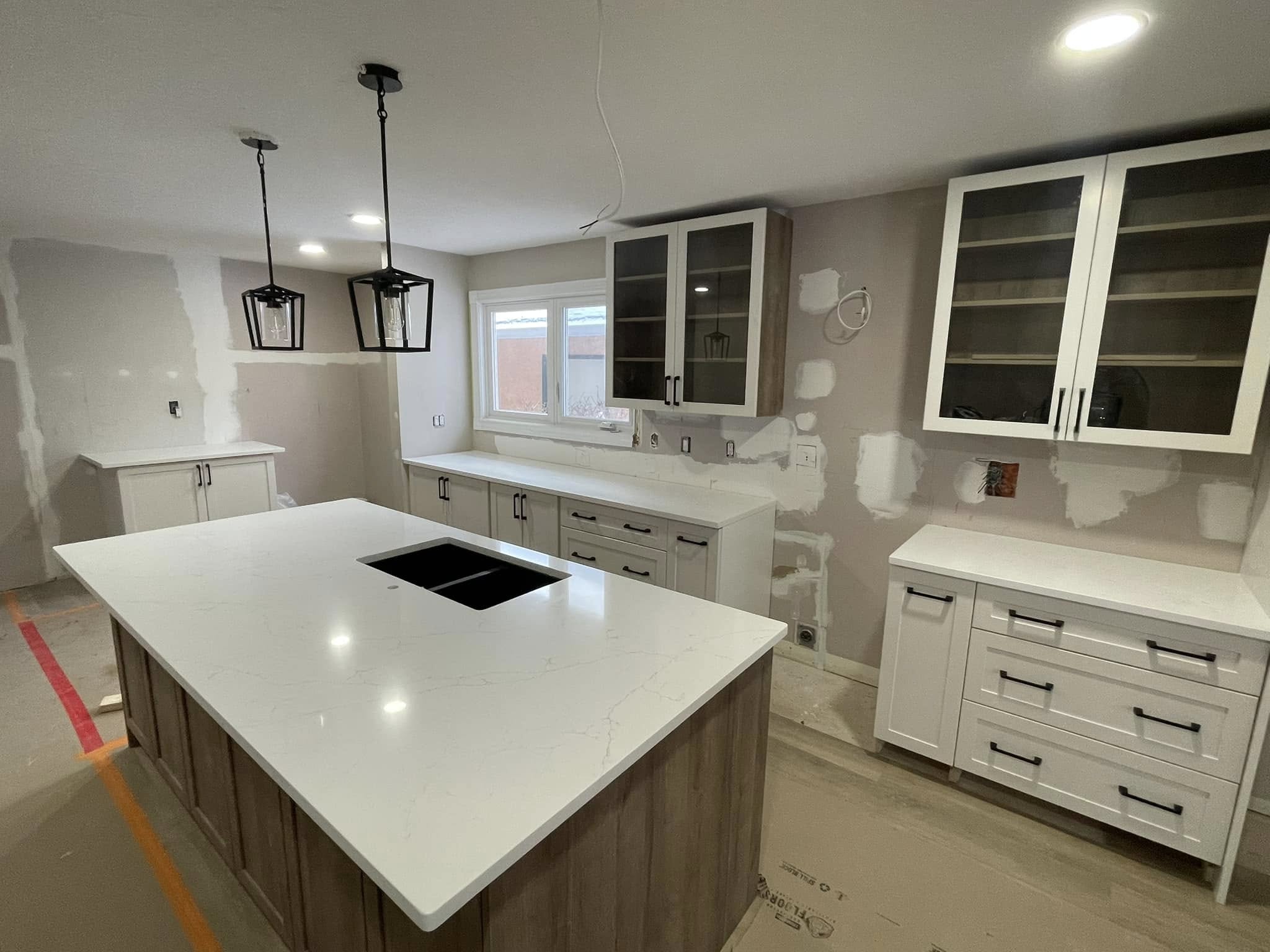
Quartz countertops

The Durability of Quartz Countertops Explained

When it comes to selecting a countertop material, durability is one of the most important factors to consider. After all, countertops are subjected to daily wear and tear, from chopping and cooking to spills and stains. Among all the materials available, quartz kitchen countertops have become a favorite due to their impressive strength and resilience. In this guide, we’ll delve into why quartz is one of the most durable options available for kitchen countertops and how it compares to other materials like granite and marble.

What Makes Quartz So Durable?

Quartz countertops are engineered from a combination of natural quartz crystals, resins, and pigments. This engineered stone is made by blending crushed quartz with resins and bonding agents under intense pressure, creating a solid and durable surface. The result is a non-porous, hard surface that outperforms many natural stones in terms of durability.

  1. Hardness
    Quartz is one of the hardest minerals on earth, ranking 7 on the Mohs scale of mineral hardness (with diamonds being a 10). This hardness gives quartz kitchen countertops incredible resistance to scratches, chips, and cracks. In fact, quartz countertops are even harder than granite, making them highly suitable for high-traffic areas like kitchens.

  2. Non-Porous Nature
    One of the most significant advantages of quartz countertops for kitchens is their non-porous surface. Unlike granite, which needs to be sealed regularly to prevent stains, quartz is naturally resistant to staining because it doesn’t absorb liquids. Whether it’s wine, coffee, or greasy foods, spills can be wiped away without worrying about them soaking into the countertop or leaving a permanent mark.

    This non-porous nature also makes quartz countertops incredibly hygienic. Because bacteria, mold, and mildew can’t penetrate the surface, quartz countertops are a safer choice for food preparation areas, ensuring that your kitchen remains clean and sanitary.

  3. Scratch and Chip Resistance
    While no surface is completely impervious to damage, quartz kitchen countertops are highly resistant to scratches and chips. The engineered construction of quartz ensures that it can handle the heavy use of a busy kitchen without showing significant damage. Chopping, cutting, and everyday kitchen activities won’t easily leave permanent marks on the surface.

    While granite may also be resistant to scratches, it can still be more prone to chipping, particularly around the edges. Quartz, on the other hand, tends to be more resilient in this regard, making it an excellent choice for families who use their kitchens regularly.

  4. Stain Resistance
    One of the standout features of quartz countertops for kitchens is their ability to resist staining. Unlike natural stone options, which are porous and require sealing to prevent stains, quartz countertops don’t absorb liquids. This means that spills from coffee, wine, oils, or even acidic substances like lemon juice won’t seep into the surface and leave unsightly marks.

    While you should still clean up spills as soon as they happen to maintain the countertop’s pristine look, quartz countertops provide peace of mind, knowing that they won’t absorb liquids like other natural stones. This makes quartz kitchen countertops a great choice for busy kitchens where spills are common.

  5. Resistance to Heat and Chemicals
    Quartz countertops are more resistant to heat and chemicals than most natural stones. While it’s still important to use trivets or hot pads to avoid direct contact with very hot pots and pans, quartz can generally withstand moderate heat exposure better than granite. Similarly, quartz is resistant to many chemicals and cleaning products, which means that harsh cleaners or acids won’t damage the surface, making it easier to clean without causing harm.

  6. Minimal Maintenance Requirements
    Because quartz is non-porous and resistant to staining, it requires very little maintenance compared to granite or marble. Unlike granite, which requires periodic sealing to maintain its stain resistance, quartz kitchen countertops do not need any special sealing treatments. You can simply wipe the surface with warm water and mild soap to keep it clean and looking fresh.

    Additionally, quartz countertops don’t require polishing or any other maintenance tasks, which makes them a hassle-free option for homeowners looking for a durable and low-maintenance surface.

How Quartz Compares to Other Materials

While quartz kitchen countertops have numerous benefits in terms of durability, it’s important to compare them to other popular countertop materials like granite and marble. Here’s how quartz stacks up:

  1. Quartz vs. Granite
    Both quartz and granite are durable options, but there are key differences. Granite countertops are naturally occurring stone and require regular sealing to prevent staining. In contrast, quartz countertops are engineered and non-porous, meaning they don’t require sealing and are naturally more resistant to staining. While granite is a natural material, quartz offers a wider range of colors and patterns since it’s engineered.

    In terms of durability, quartz has the edge when it comes to scratch resistance and consistency. Granite may have natural imperfections that could make it more prone to cracking, especially in the edges. Quartz, being uniform in structure, offers better long-term durability.

  2. Quartz vs. Marble
    Marble is a luxurious and visually appealing material, but it is much more prone to scratching, staining, and etching due to its porous nature. While quartz kitchen countertops are resistant to stains, scratches, and chips, marble requires regular maintenance and sealing to prevent damage. Marble is also more susceptible to acidic substances like lemon juice and vinegar, which can cause permanent etching.

    Quartz kitchen countertops, on the other hand, don’t require sealing and are highly resistant to stains and scratches. While marble is a beautiful option, it doesn’t offer the same level of durability or low maintenance as quartz does.

  3. Quartz vs. Concrete
    Concrete countertops have become popular for their industrial and customizable look, but they come with a few downsides. Concrete is prone to cracking over time, especially in areas with high stress or heavy impact. Additionally, concrete countertops are porous and require sealing to prevent staining.

    Quartz countertops are far superior in terms of durability. Unlike concrete, quartz kitchen countertops do not need regular sealing and are not as prone to cracking or chipping. Moreover, quartz offers a more consistent and sleek appearance compared to the rough, often inconsistent look of concrete countertops.

Why Quartz Is Ideal for High-Traffic Kitchens

Given their outstanding durability, quartz kitchen countertops are perfect for high-traffic kitchens that see constant use. Whether you’re cooking, entertaining, or preparing meals for a large family, quartz countertops can handle it all without showing wear and tear. Their scratch-resistant surface makes them ideal for chopping and food preparation, while their non-porous nature ensures that stains won’t become a problem.

If you have young children or pets, quartz countertops offer a safe and practical surface. Their resistance to bacteria and germs makes them an excellent choice for a kitchen environment where hygiene is important. With the right care, quartz kitchen countertops can last for decades, maintaining their beauty and functionality over the long term.

Conclusion

In conclusion, the durability of quartz kitchen countertops makes them one of the best options for homeowners looking for a reliable, long-lasting surface. From their resistance to scratches, stains, and chips to their non-porous nature and minimal maintenance needs, quartz countertops provide everything you need for a durable and stylish kitchen.

When compared to other materials like granite, marble, and concrete, quartz comes out on top in terms of durability and ease of maintenance. Whether you’re remodeling your kitchen or building a new one, choosing quartz countertops for kitchens ensures that you’re investing in a surface that will withstand the rigors of daily life while adding elegance and value to your home.

So, if you’re looking for a countertop that can handle your busy kitchen and still look great for years to come, quartz kitchen countertops are the perfect solution.
Leave a Reply

Your email address will not be published. Required fields are marked *