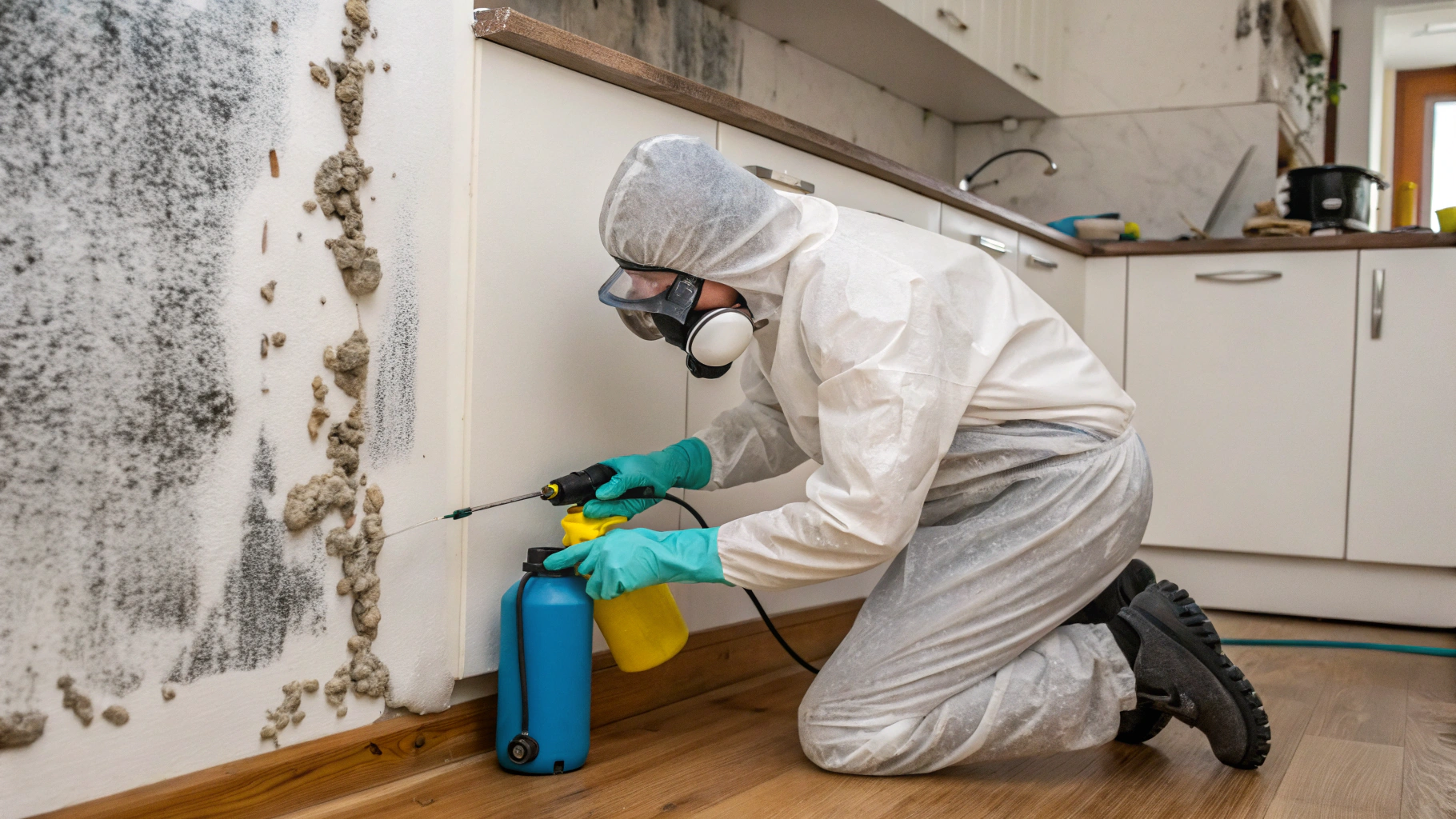
Black mold poses serious health risks, and proper safety protocols are essential during cleanup. Professional mold remediation uses full PPE, containment systems, HEPA air filtration, safe removal methods, and post-cleanup testing to ensure long-term safety. DIY cleaning lacks adequate protection, containment, and filtration, increasing health risks and chances of mold spreading or returning. Professional help is recommended for larger or hidden mold problems.
–
Black mold is more than just an unsightly household problem; it can pose serious health risks if handled incorrectly. Many homeowners wonder whether they can clean black mold themselves or if professional help is necessary. The answer largely depends on safety protocols, equipment, and extent of mold growth.
In this blog, we’ll clearly compare professional black mold cleaning safety protocols versus DIY black mold cleaning without professional equipment, so you can make an informed and safe decision.
Black mold, commonly known as Stachybotrys chartarum, thrives in damp, poorly ventilated areas such as basements, bathrooms, crawl spaces, and behind walls. When disturbed during cleaning black mold, it releases microscopic spores into the air, which can cause respiratory issues, allergic reactions, skin and eye irritation, headaches, and fatigue. In severe cases, exposure may lead to serious complications for people with asthma or weakened immune systems. Because of these risks, following proper safety protocols is critical, whether cleaning professionally or attempting a DIY approach.
Professional mold remediation teams follow strict industry-approved safety standards to protect both occupants and workers.
Professionals use specialized PPE, including:
This equipment prevents mold spores from being inhaled or coming into contact with skin.
Professionals isolate the mold-contaminated area using:
This prevents spores from spreading to other parts of the building.
High-efficiency air scrubbers and HEPA filtration systems are used to:
This step is critical and impossible to replicate fully without professional equipment.
Professionals do not just “wipe away” mold. They:
This ensures mold does not regrow or spread.
After remediation, professionals often perform:
This confirms the mold problem has been properly resolved.
DIY black mold cleaning is sometimes attempted for very small, surface-level mold patches, but it comes with significant risks.
Most homeowners rely on basic protection such as:
Unfortunately, these do not adequately block microscopic mold spores, increasing the risk of inhalation.
Without professional containment tools:
Opening windows alone does not prevent cross-contamination.
Household fans or vacuums are not designed for mold remediation. In fact:
Without HEPA filtration, spores remain airborne.
DIY cleaners often use bleach or household solutions. While bleach may remove surface stains, it:
This leads to recurring mold problems.
Without professional safety measures, DIY mold cleaning may result in:
People with allergies, asthma, or compromised immune systems should never attempt DIY black mold removal.
| Aspect | Professional Cleaning | DIY Cleaning |
| Protective Equipment | Full PPE & respirators | Basic masks & gloves |
| Containment | Sealed, controlled areas | No effective containment |
| Air Filtration | HEPA air scrubbers | Fans or no filtration |
| Effectiveness | Long-term mold removal | Temporary or ineffective |
| Health Safety | High level of protection | High exposure risk |
When deciding how to handle a mold problem, safety should always come before convenience or cost. The difference between professional remediation and a DIY attempt becomes especially clear when you clean black mold, as improper protection, containment, and filtration can put your health and home at risk. Understanding and respecting proper safety protocols helps prevent exposure, limits mold spread, and ensures the problem is addressed correctly the first time. In many cases, choosing professional expertise is the safest and most responsible decision.