

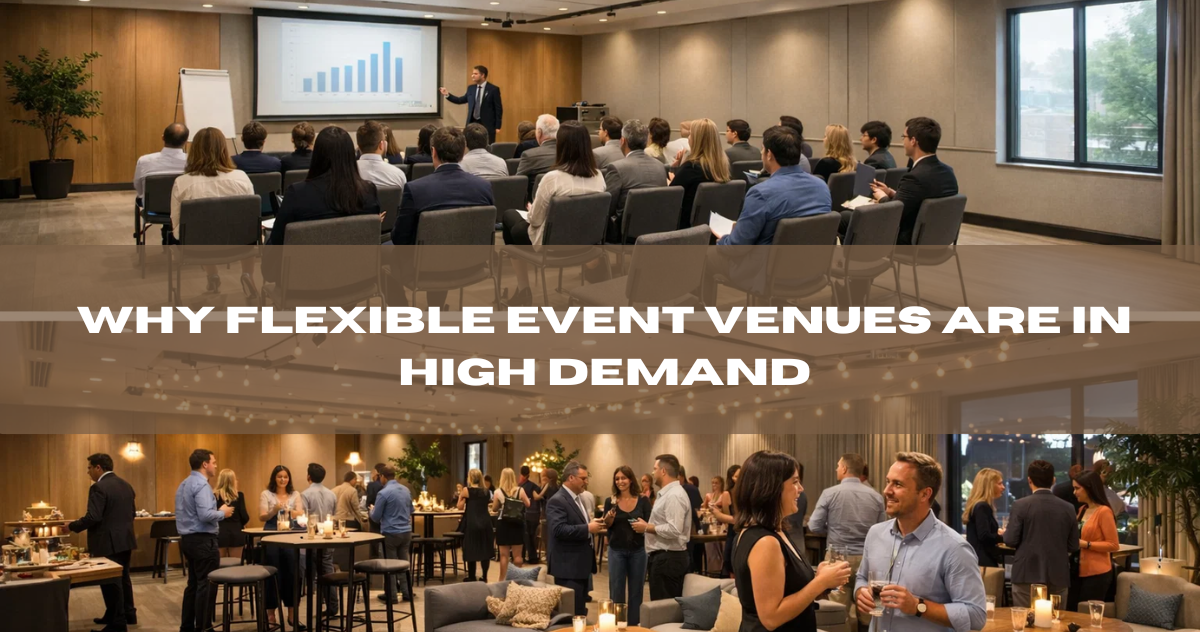
Modern events are no longer one-size-fits-all. From intimate celebrations to professional gatherings, hosts today expect spaces that can adapt to their vision, schedule, and guest experience. This shift in expectations has driven the rising demand for flexible event venues—spaces designed to evolve with changing needs rather than limit them.
In urban environments, where space and time are both premium, people increasingly seek venues that offer comfort, convenience, and adaptability under one roof. This is also why accommodation-linked spaces, such as Service Apartments in Chennai, have gained popularity among event planners and guests alike. These setups naturally support flexible hosting, extended stays, and seamless transitions between events and personal downtime. As lifestyles become more dynamic, flexibility has become the defining factor in venue selection.
Events today are more diverse than ever. A single venue may be expected to host:
Traditional venues designed for only one type of event struggle to meet these evolving requirements. Flexible venues, on the other hand, are built with adaptability in mind—movable layouts, scalable seating, multi-purpose rooms, and customizable services.
This versatility allows hosts to rethink how events are planned and experienced, without being constrained by rigid infrastructure.
One of the main reasons flexible event venues are in high demand is their ability to transform quickly. Adjustable floor plans allow hosts to:
Whether it’s a workshop that requires classroom seating or a celebration that calls for open mingling space, flexible venues remove the stress of compromise.
This adaptability is especially important for planners who host recurring events and want a consistent location that doesn’t feel repetitive.
The rise of hybrid events—those that combine in-person and virtual participation—has reshaped venue requirements. Flexible venues are better equipped to:
Rather than being limited to a single format, these venues can accommodate panel discussions, product launches, training sessions, and social events with equal ease.
This capability has made flexible venues particularly attractive for businesses and organizations that value future-ready infrastructure.
Another reason behind the growing demand is operational convenience. Flexible venues often provide:
This reduces planning complexity and allows hosts to focus more on content and guest experience rather than logistics. When time is limited, having a venue that adapts quickly becomes a significant advantage.
Flexibility doesn’t just improve functionality—it also impacts cost efficiency. Instead of booking multiple venues for different purposes, hosts can use a single adaptable space for:
This consolidated approach minimizes additional expenses while maintaining a high-quality experience for guests.
What sets flexible venues apart is their ability to balance professionalism with warmth. These spaces are increasingly chosen for:
Their neutral yet refined design allows personalization without overpowering the event’s purpose. Décor, lighting, and layout can be adjusted to suit the mood—formal or casual.
Today’s event hosts are deeply focused on guest experience. Flexible venues often emphasize:
Guests appreciate venues that don’t feel overwhelming or restrictive. When people feel at ease, events naturally become more engaging and memorable.
Another factor driving demand is convenience beyond the event itself. Flexible venues are often located near:
This makes them suitable for multi-day events and gatherings involving outstation guests, elderly attendees, or professionals on tight schedules.
There is a growing preference for venues that offer accommodation options alongside event spaces. This allows:
For example, attendees looking for Hotels near Apollo Hospital in Chennai often prioritize venues that combine comfortable stays with functional gathering spaces. Such locations reduce travel fatigue and provide peace of mind, especially when events are connected to medical visits, conferences, or family commitments.
Perhaps the biggest reason flexible event venues are in high demand is their ability to stay relevant. As event formats continue to evolve, these venues can adapt without requiring major redesigns.
This future-proof nature makes them a smart choice for hosts who value long-term usability and consistent quality.
The demand for flexible event venues reflects a broader shift in how people gather, celebrate, and collaborate. Adaptability, comfort, efficiency, and guest-centric design have become non-negotiable factors in event planning.
As expectations continue to rise, venues that offer versatility without compromising experience will remain the preferred choice—proving that flexibility is no longer an option, but a necessity.

